t0 · referenceReliable shelf monitoring is an important capability for retail automation, yet existing out-of-stock detection methods mainly operate in image space and lack metric 3D localization for downstream robotic systems. We formulate shelf monitoring as object-level 3D change detection: given two RGB-D observations captured at different times, the goal is to identify changed products and localize each change with a 3D bounding box. To support this task, we introduce ShelfChange3D, comprising 145K synthetic and 5K real-world paired RGB-D observations with object-level 3D change annotations. We further propose ChangeBox, an end-to-end framework that jointly reasons over paired observations and predicts object-level 3D change boxes. To improve localization accuracy, we introduce a geometry-based refinement stage that exploits depth and a gravity prior to estimate relative pose and refine predicted boxes. Experiments show that ChangeBox outperforms existing change detection baselines, with further gains from refinement and effective transfer from synthetic to real-world observations.
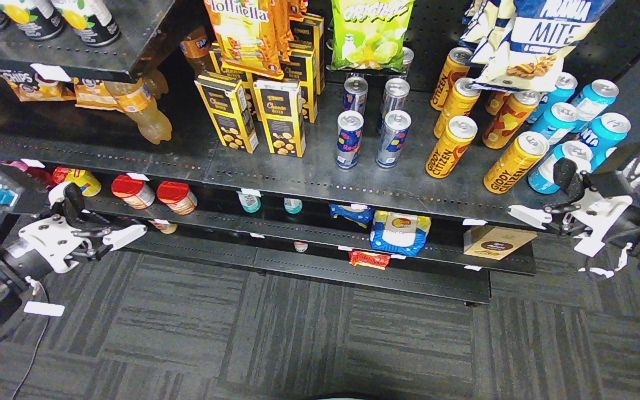
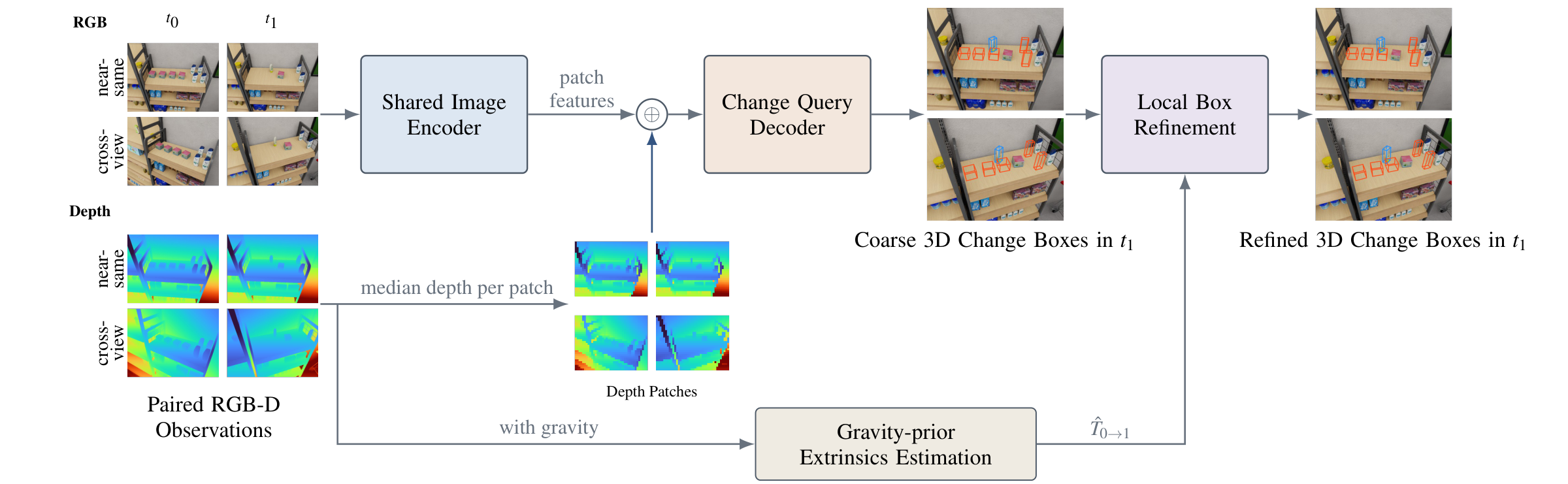
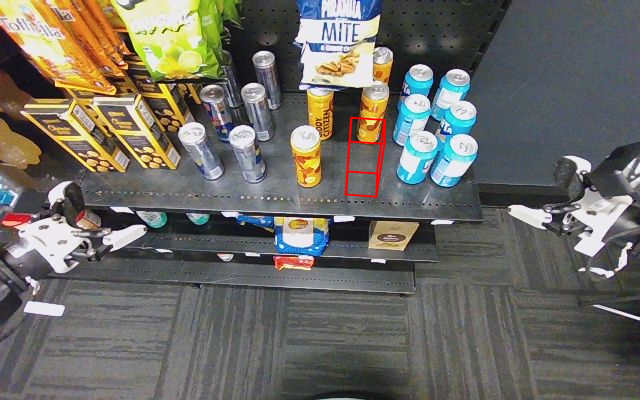
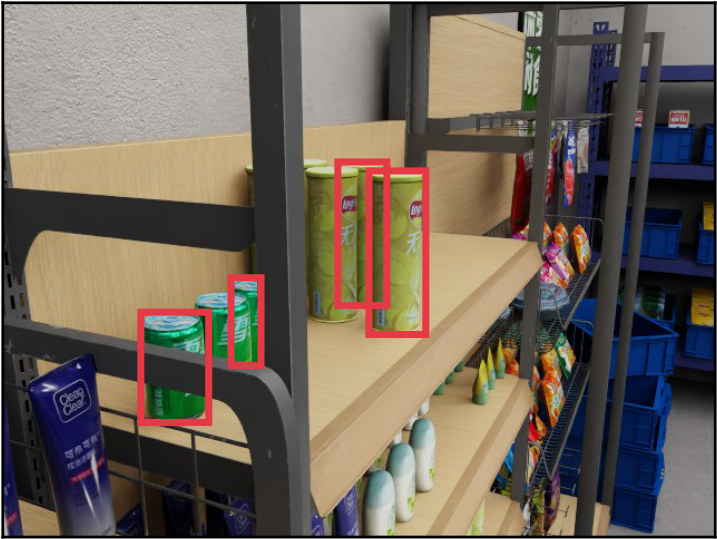
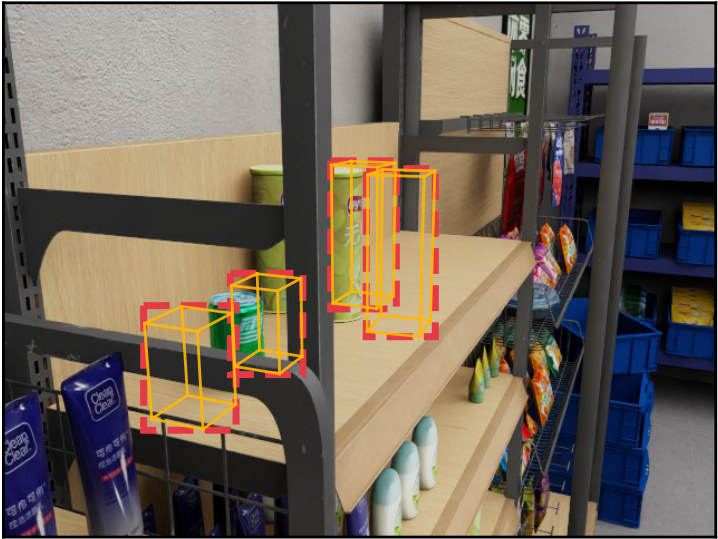
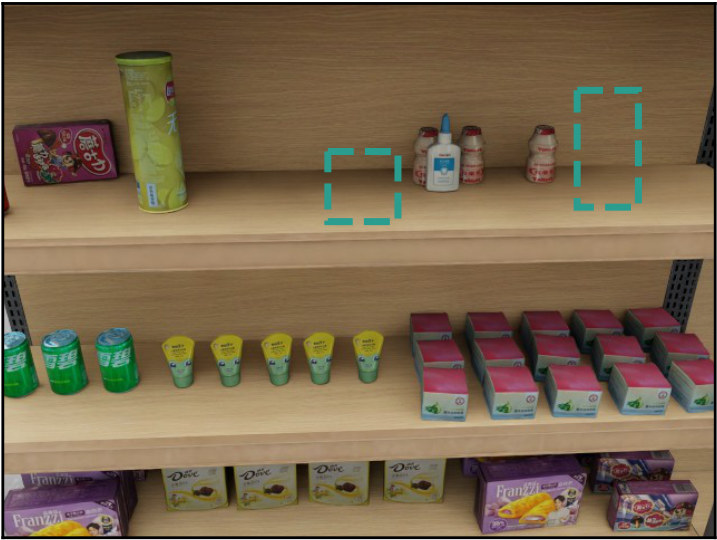
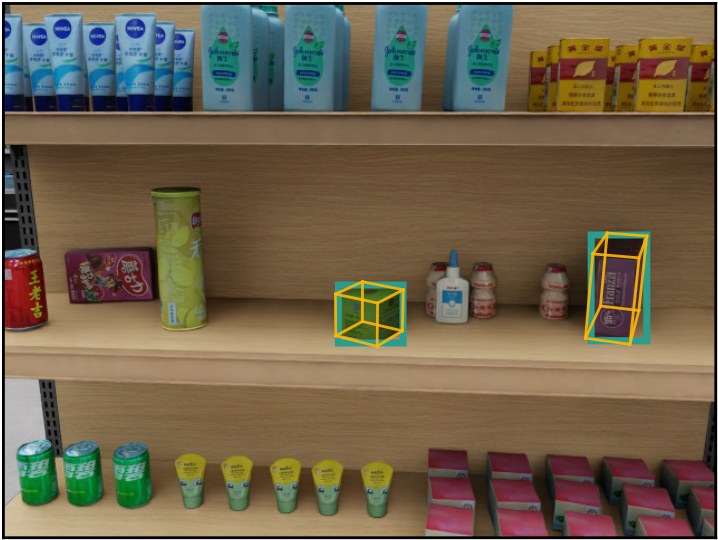
Given a pair of RGB-D observations captured before and after the change, ChangeBox jointly reasons over the two observations and detects the changed products (Removed or Added) as oriented 3D boxes in the current camera frame. A geometry-based stage further refines the predicted boxes.
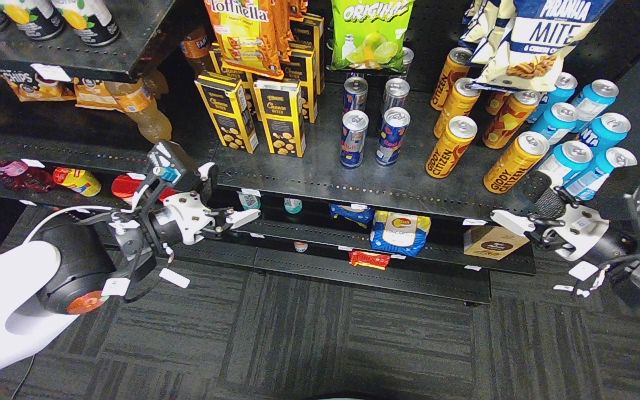
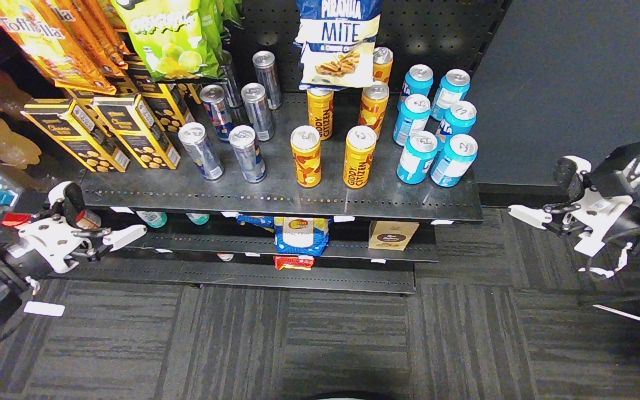
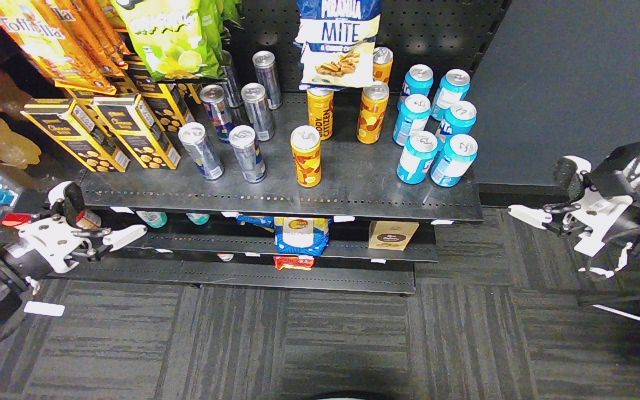
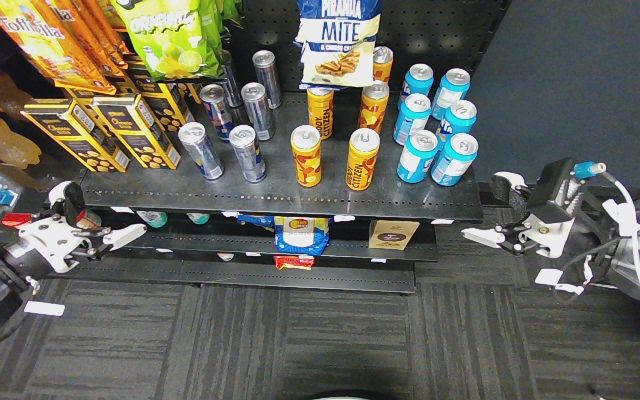
We demonstrate a dual-arm humanoid robot using ChangeBox to identify removed products and place them back on the shelf, restoring it to its fully stocked state.
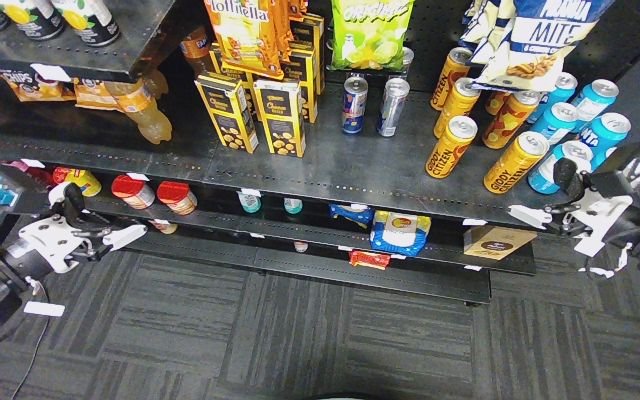
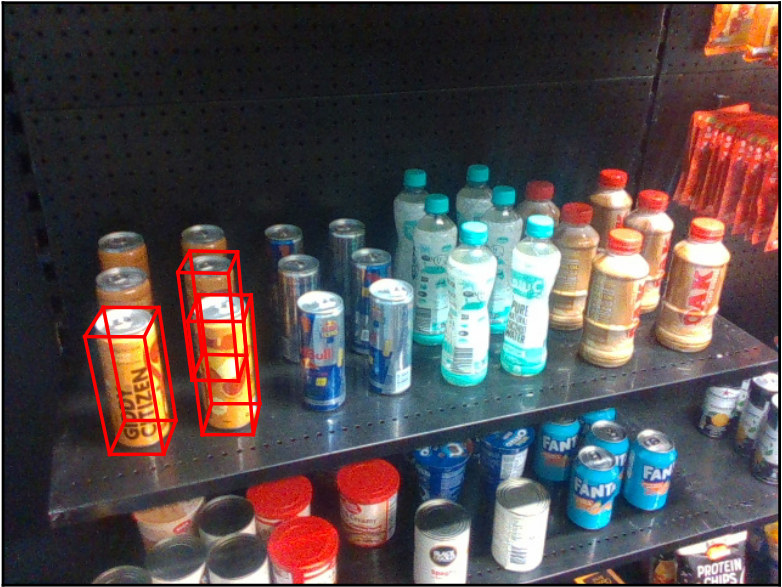
t0 · reference
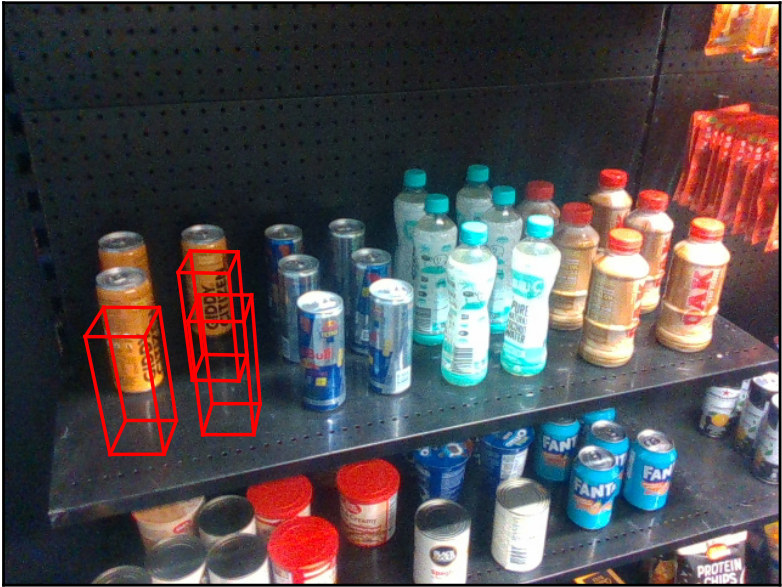
t1 · current
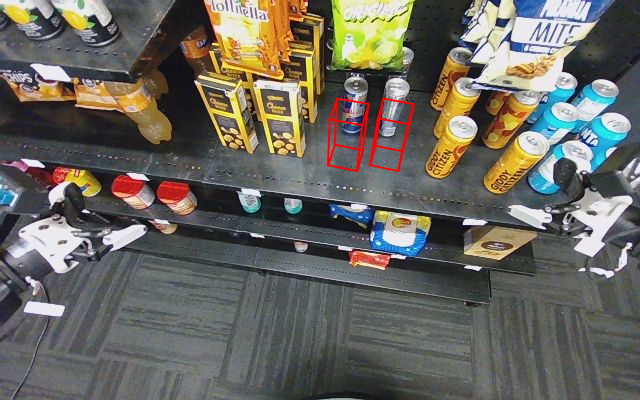
ChangeBox → 3D boxes
After restocking
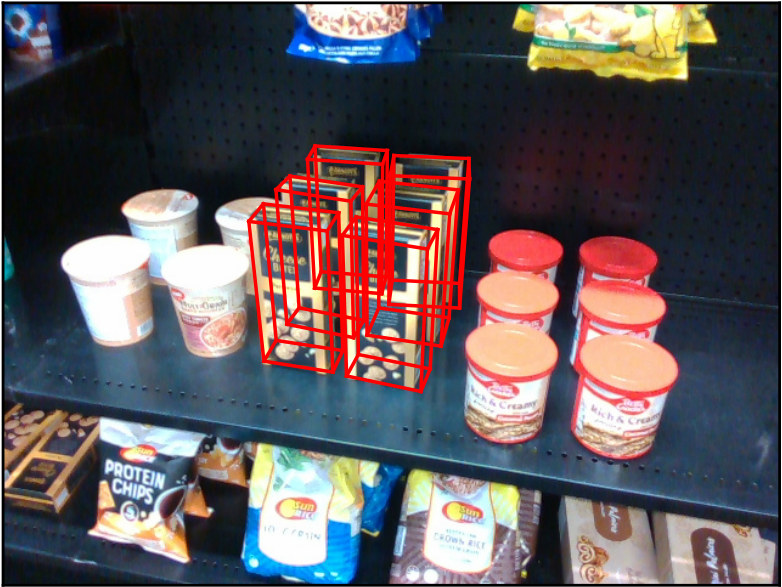
t0 · reference
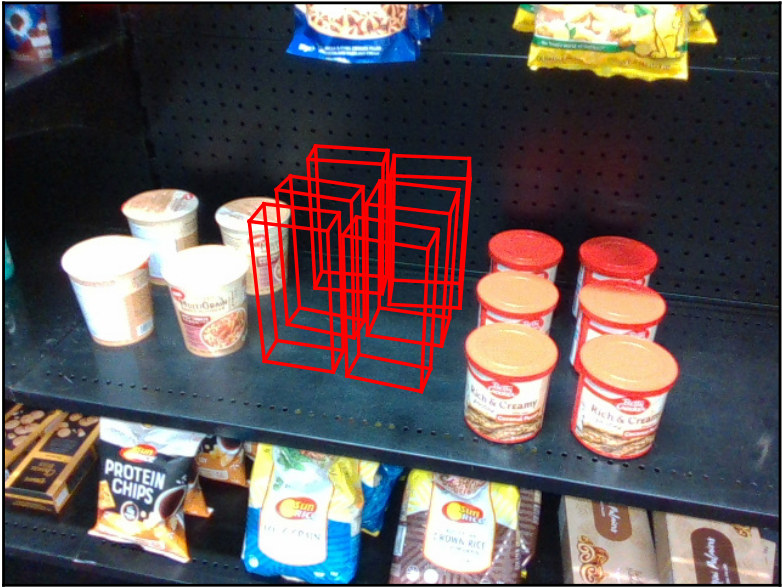
t1 · current
ChangeBox → 3D box
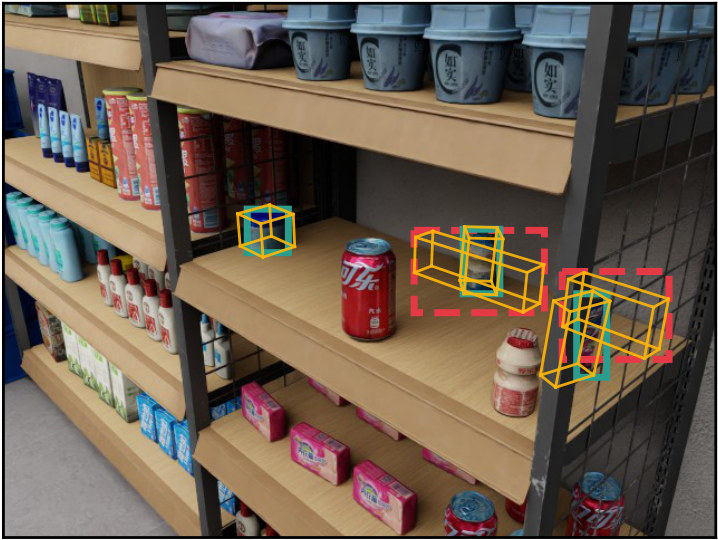
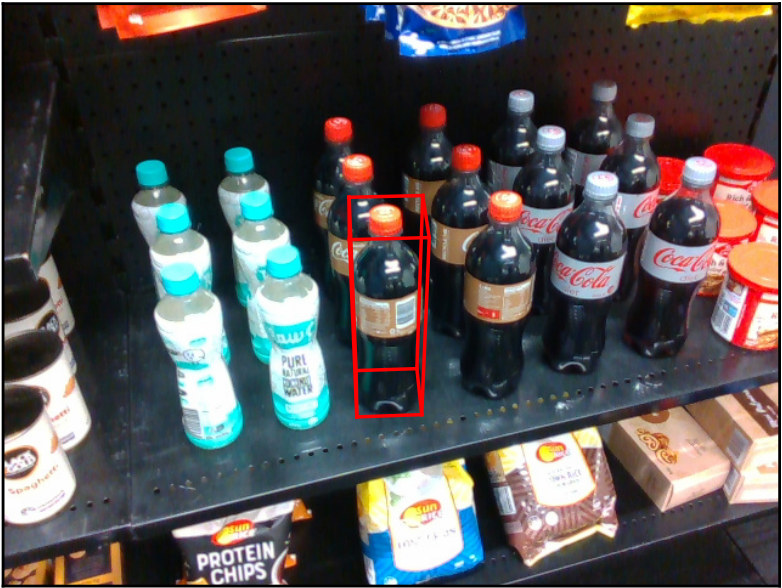
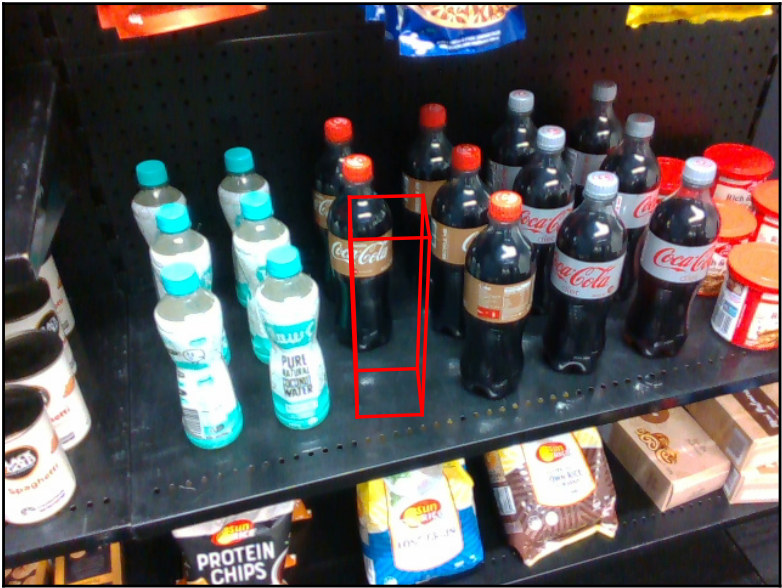
After restockingPaired RGB-D observations with oriented 3D box for every removed or added product, expressed in the t1 camera frame.
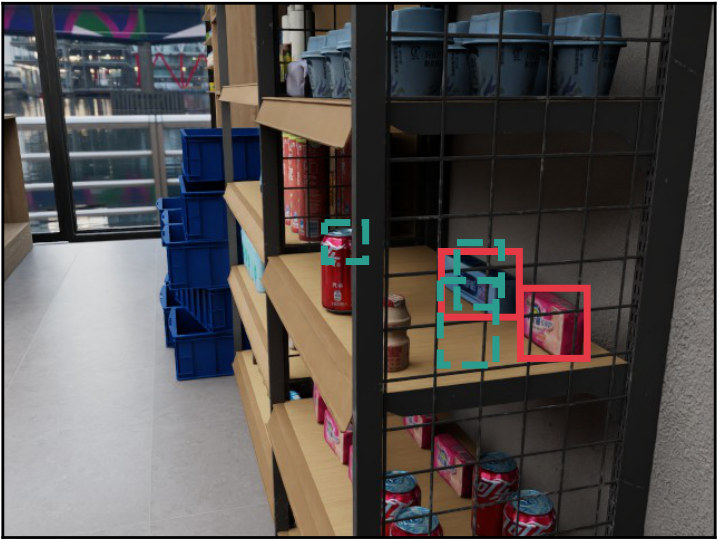
Synthetic pairs rendered in simulation. Red = removed, teal = added.
Real-World pairs captured with an RGB-D camera. Red = removed.
@misc{zhou2026shelfchange3dobjectlevel3dchange,
title={ShelfChange3D: Object-Level 3D Change Detection for Retail Shelf Monitoring},
author={Lingyi Zhou and Yunke Wang and Mengyu Zheng and Wenbo Wang and Zijian Wang and Chang Xu},
year={2026},
eprint={2610.01283},
archivePrefix={arXiv},
primaryClass={cs.CV},
url={https://arxiv.org/abs/2610.01283},
}